Conveyor-based, optical, and robotic sorting equipment for automated classification of recyclable materials by type, colour, and density.
Sorting Equipment
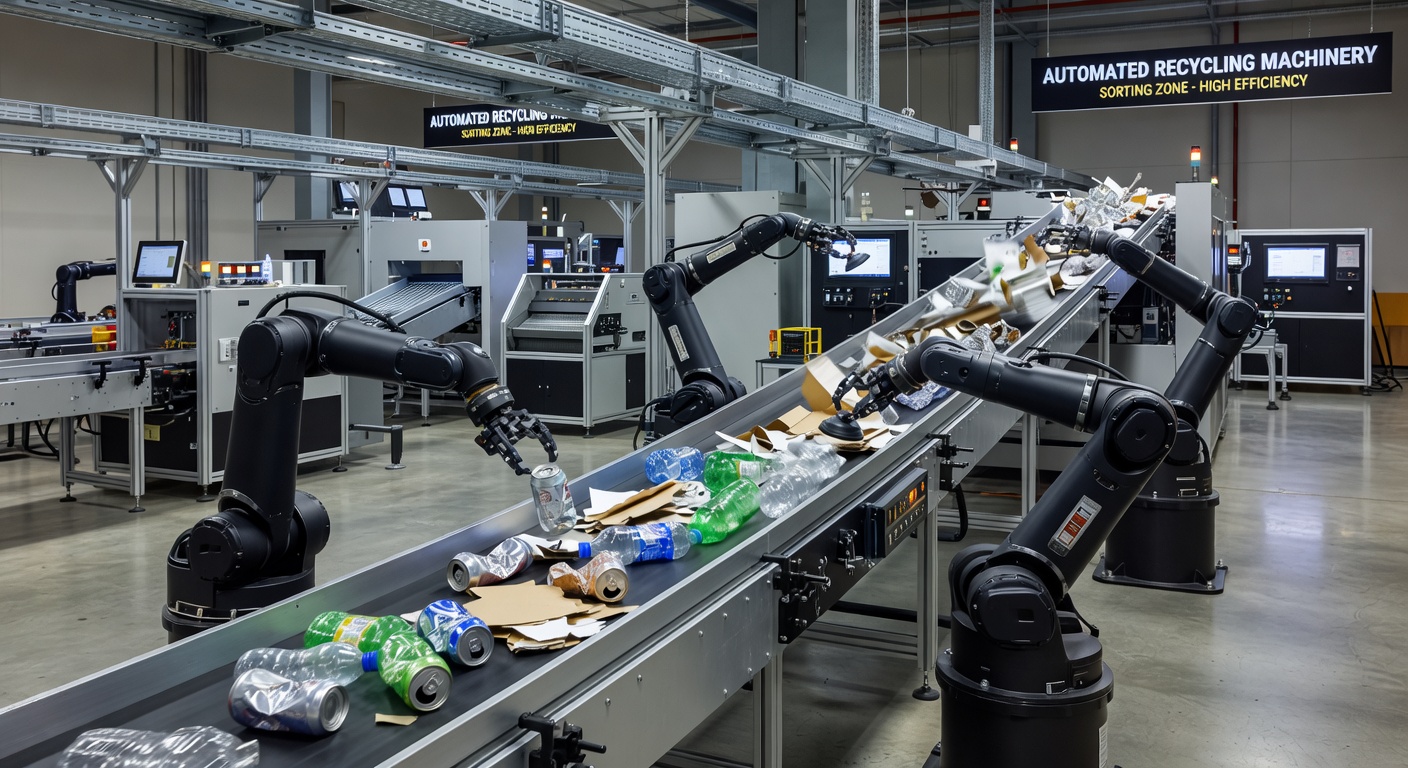
Robotic & Optical Sorting Lines
Automated systems that reduce manual sorting labour and improve material purity at the output stage of material recovery operations.
WGS-RCS — robotic conveyor sorting system, up to 3,600 picks/hour per armWGS-OS Series — NIR optical sorter for plastic type classification
System Types
Sorting System Models
Available as standalone units or integrated into a complete material recovery facility (MRF) line layout.
Conveyor
WGS-CB Conveyor Belt Sorter
Manual-assist flat belt conveyor sorting lines with adjustable belt speed, overhead lighting, and ergonomic picking stations.
Belt Width
800–1,600 mm
Belt Speed
0.2–0.8 m/s
Line Length
6–40 m
Stations
4–20 picking positions
Optical
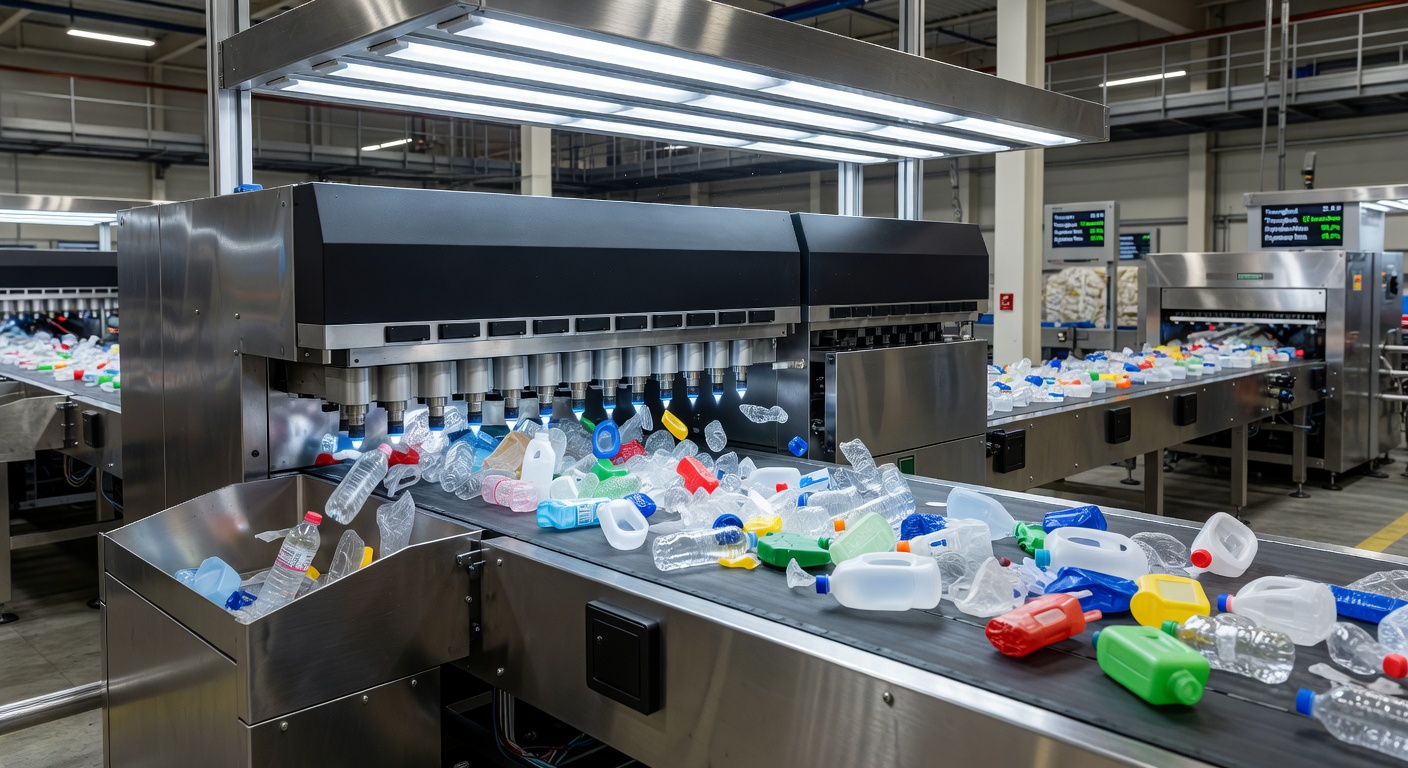
WGS-OS Optical Sorter
Near-infrared (NIR) and visible-spectrum sensors identify PET, HDPE, PP, PS, and PVC. Air-jet ejection to multiple fraction bins.
Belt Width
1,000–2,000 mm
Throughput
2–12 t/h
Particle Size
20–300 mm
Fractions
Up to 6 simultaneous
Robotic
WGS-RCS Robotic Sorter
AI-vision picking robots mounted over conveyor lines. Configurable for multiple material fractions. Scalable 1–8 robot arm configuration.
Picks/Hour
Up to 3,600 per arm
Recognition
AI vision + NIR
Fractions
Up to 12
Integration
PLC / SCADA
System Design
Sorting Line Features
Technical design elements that ensure sorting accuracy and operational efficiency in continuous-duty environments.
NIR Spectroscopy
Near-infrared sensor heads identify polymer type regardless of object colour, shape, or surface printing at belt speed.
Precision Air Ejection
High-speed solenoid-actuated nozzle arrays direct compressed air pulses to eject identified items to target fraction chutes.
HMI Control Panel
Touchscreen interface displays real-time sorting throughput, fraction purity estimates, and system alarm status.
Data Logging
Onboard logging of throughput, ejection counts, and material ratios for production reporting and process optimisation.
Sorting Line Layout Consultation
Share your facility dimensions and material mix to receive a proposed sorting line layout including conveyor routing, sorter positions, and fraction bin placement.