Magnetic, eddy current, and density separation equipment for isolating ferrous metals, aluminium, copper, and electronic components from mixed waste streams.
Separation Equipment
Magnetic & E-Waste Separators
Purpose-built machines for extracting metallic fractions and recovering high-value components from shredded or granulated waste materials.
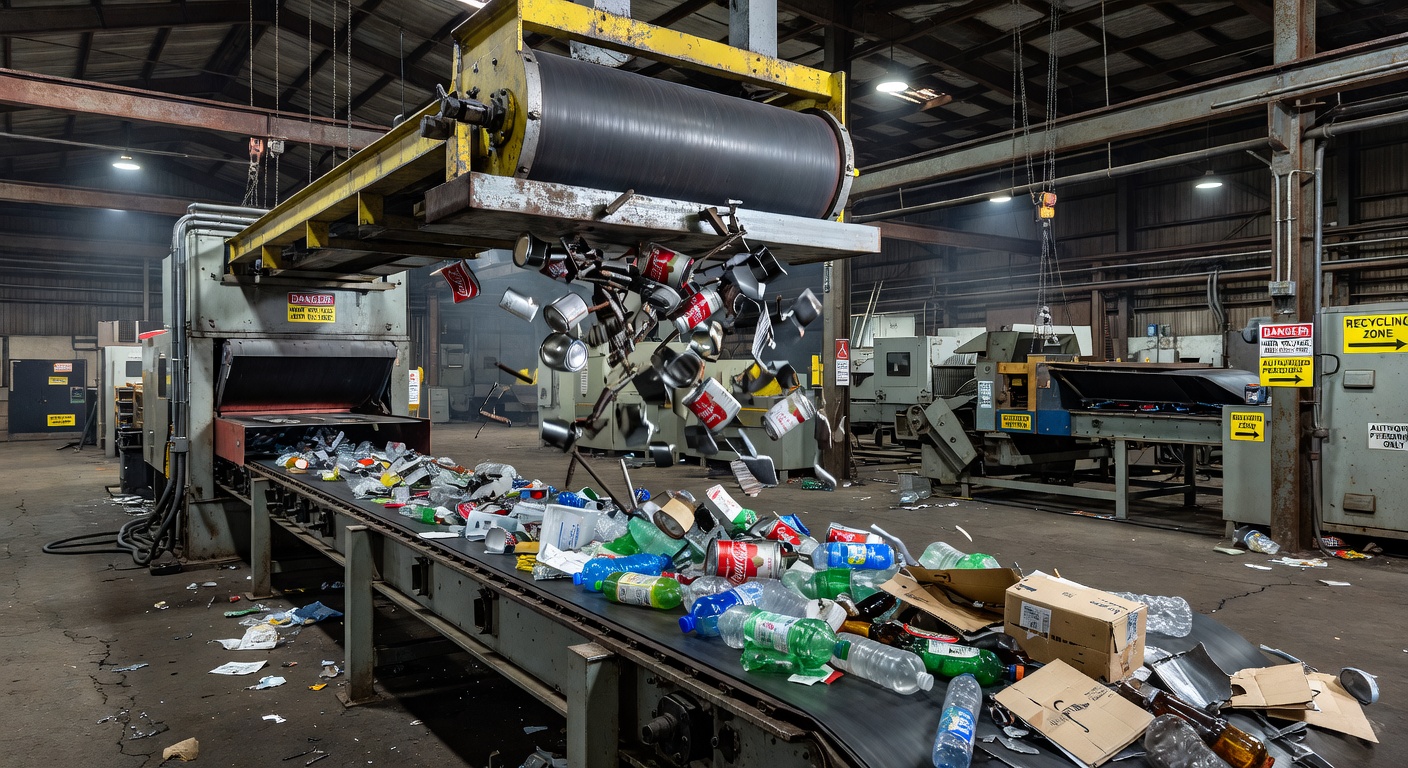
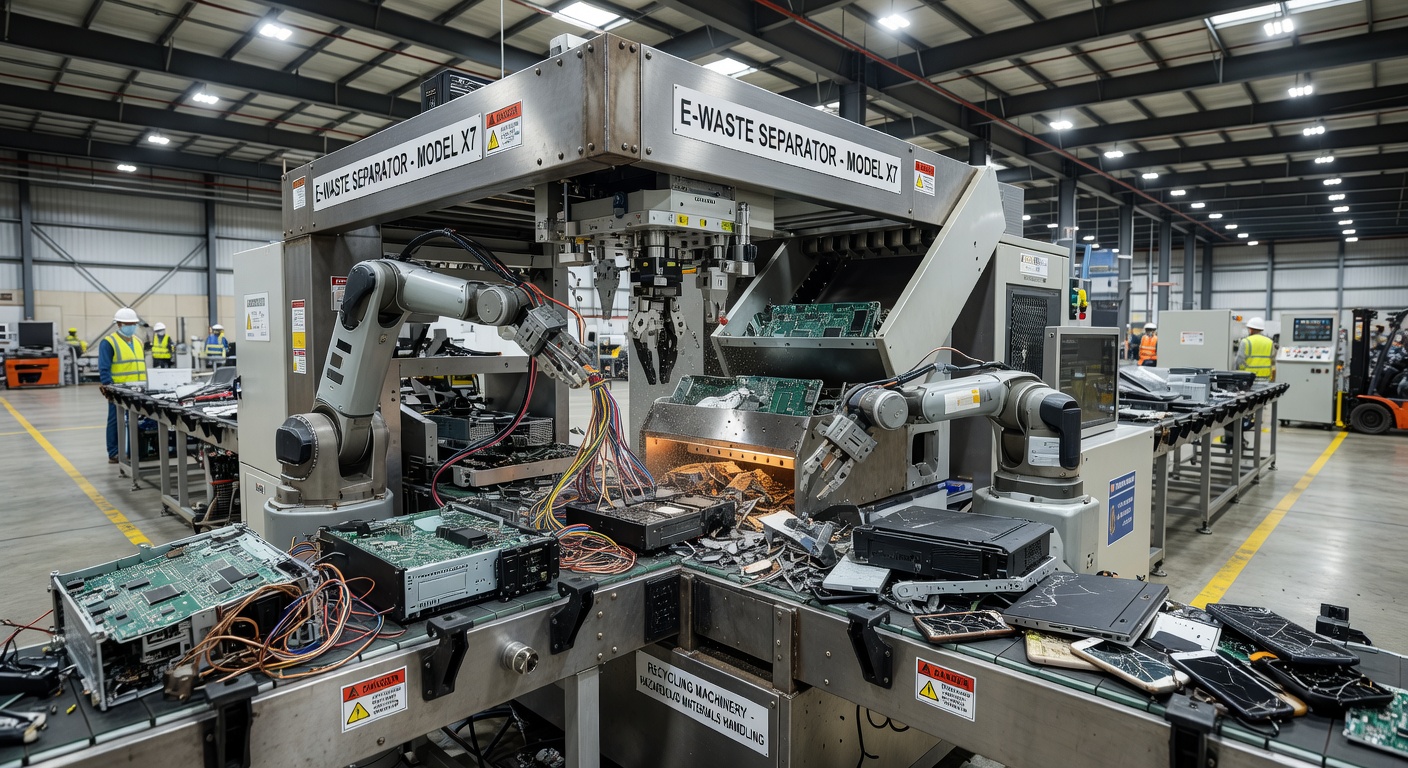
WGS-MS Series — overhead magnetic separator for ferrous metal recoveryWGS-EW Series — e-waste granulator and separator for PCB processing
Separator Types
Separation Technology Overview
Different separation principles target different material fractions. Systems can be combined in sequence for multi-fraction metal recovery.
Magnetic
WGS-MS Magnetic Separator
Overhead belt or drum magnetic separators for continuous ferrous metal extraction from conveyor-fed material streams.
Belt Width
500–2,000 mm
Magnet Type
Permanent / Electro
Field Strength
Up to 12,000 Gauss
Separation
Ferrous metals
Eddy Current
WGS-EC Eddy Current Separator
High-speed rotor with rare-earth magnets generates eddy currents that repel non-ferrous metals (Al, Cu, Zn) from material flow.
Belt Width
600–1,800 mm
Rotor Speed
2,000–4,000 RPM
Throughput
1–15 t/h
Separation
Non-ferrous metals
E-Waste
WGS-EW E-Waste Separator
Two-stage system: granulator reduces PCBs and cables, followed by air classification and electrostatic separation to recover metals from non-metals.
Feed Material
PCB, wire, cable
Output
Metal / Non-metal flake
Metal Recovery
>96% by weight
Throughput
100–500 kg/h
Additional Separation
Density & Air Separation
Gravity and air-based separation systems complement magnetic and eddy current separators to achieve higher output purity.
Air Classification
Upward airflow separates light fractions (plastic film, paper dust) from dense fractions (metals, glass, mineral particles).
Wet Density Separation
Heavy media or plain water tanks separate materials by specific gravity. Effective for separating mixed plastics by resin type.
Ballistic Separator
Inclined paddle screen separates 3D items (bottles, containers) from 2D flat material (film, paper) and fines in a single pass.
Electrostatic Separation
High-voltage corona discharge separates conductor (metal) particles from non-conductor (plastic) particles after e-waste granulation.
Separator systems are available as standalone units or integrated into a complete processing line. All units are mounted on steel frames for straightforward installation over existing conveyor infrastructure.
Separator Configuration Enquiry
Describe your input material and target recovery fractions. Our engineers will recommend an appropriate separator type and configuration for your application.